B&Co. Design | Build · November 6, 2026 · 4 min read
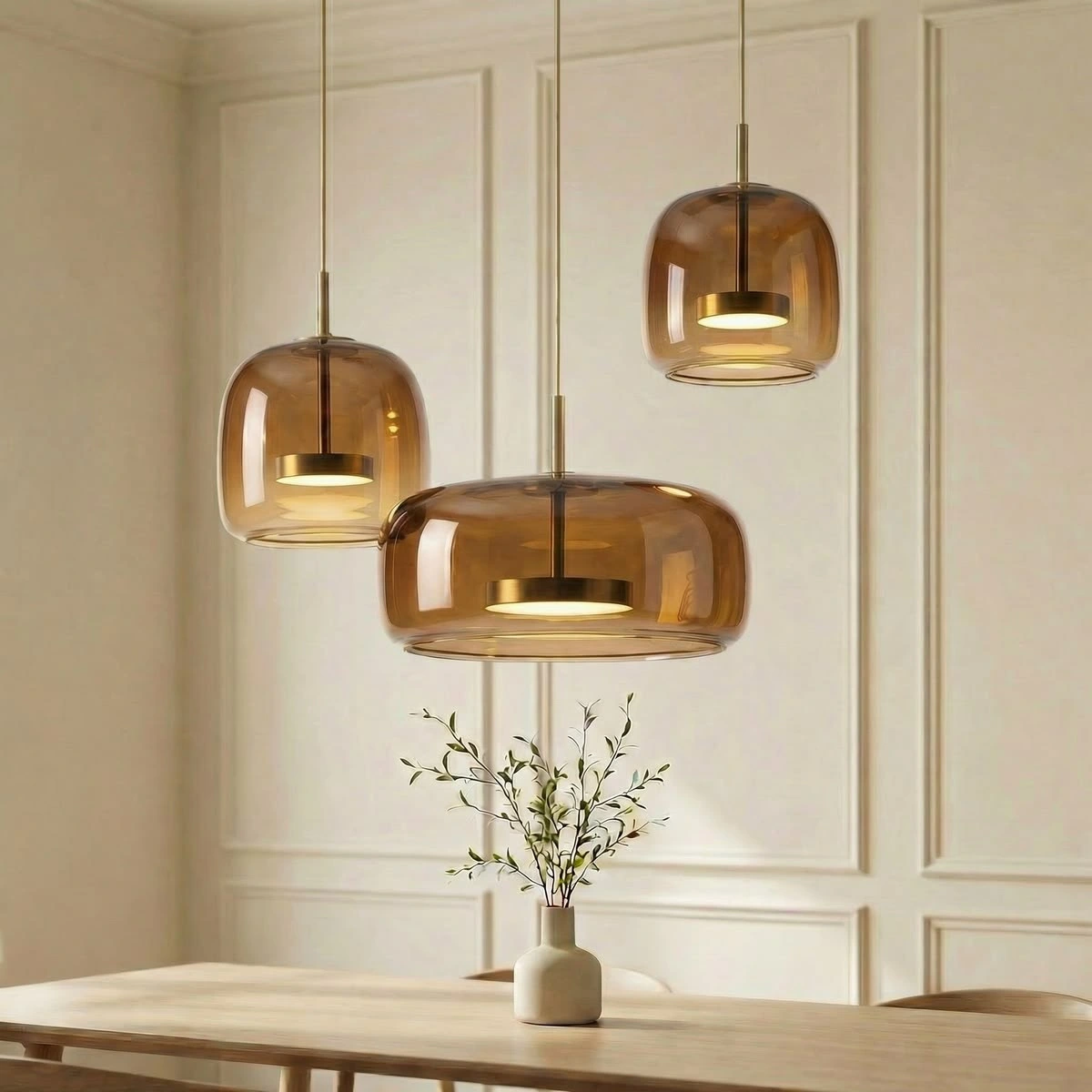
Amber pendant reference: three distinct shades form one composition above a table. Editorial reference, not a B&Co. project.
Locate a dining pendant from the table it serves, not from the midpoint of the room. Before fixing the ceiling point, put the table, chairs and walking route on the same drawing, then stand in the room and check what the fixture would interrupt.
Set the table on the plan
Begin with the table that will be there most of the time. Mark its edges and the position of the chairs with someone seated and with the chairs pulled back. In a room that opens to a kitchen or terrace, trace the path between those places with the chairs out. A centered table can look orderly on an empty plan and still put the working edge of the room in the wrong place.
Give the everyday arrangement a clear priority. If an extending table opens toward one end, draw it both ways. Decide whether the pendant should favor the shorter setting or span the longer one. A room can accommodate both arrangements without giving each the same visual emphasis. The choice is easier to discuss when both outlines are in front of you.
On that drawing, mark the center of the fixture’s visible composition and its ceiling attachment separately. The amber pendants above are a useful reference: each shade occupies a different place, yet the group reads against a single table. The photograph cannot tell us where to put a ceiling box. It can prompt a better question about which part of the table the group should address.
Look through the room, then sit down
Check the proposed drop from the places that matter: a chair at the table, the doorway from which the room is first seen, and a nearby seat that looks across it. Hold a paper outline where the bottom of the shade would be. A small object held close to the ceiling is a poor stand-in for a broad shade in the middle of the view. Give the mock-up the widest part of the fixture as well as its lowest point. Louis Poulsen’s guide, Lighting above your dining table, read November 6, 2026, recommends testing the height before cutting the cable and keeping views across the table clear.
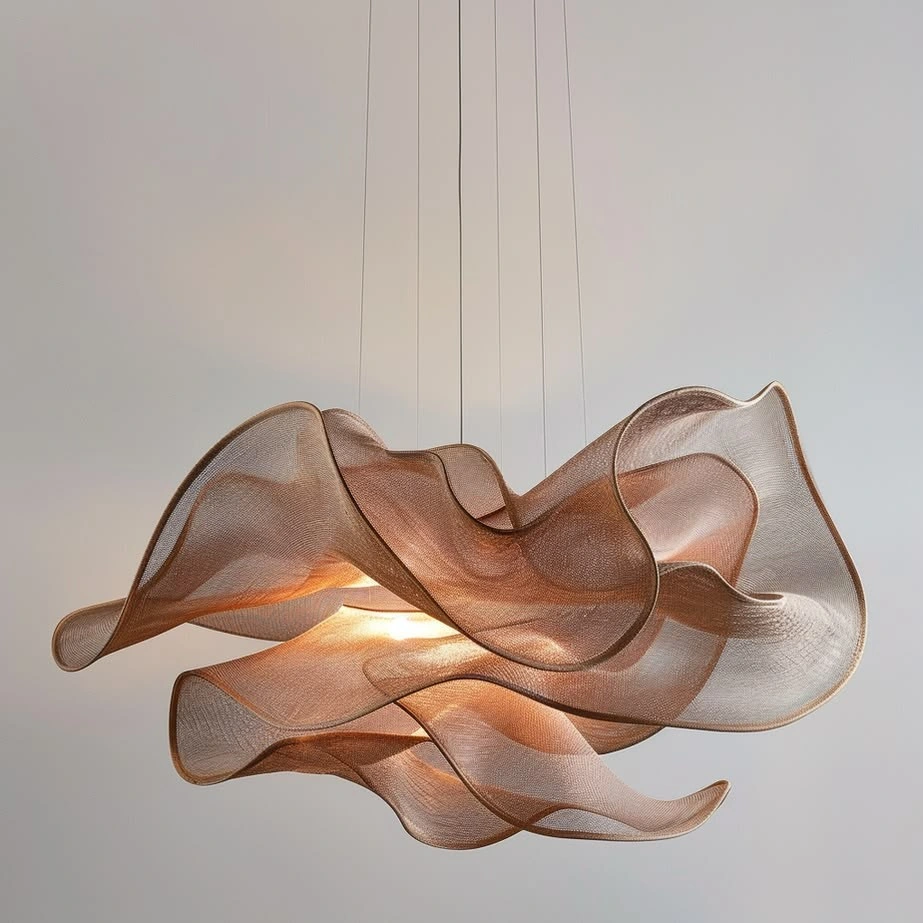
Folded shade reference: the width of the outline matters as much as the position of its lowest point. Editorial reference, not a B&Co. project.
A folded, broad shade is a useful reminder that the view through the room depends on the whole outline. Try the mock-up with the table in place. If it interrupts a view that matters, move the mock-up before moving the furniture. The table may already be in the right place for serving dinner and crossing the room.
Decide what should stay fixed by drawing what will move.
Put the ceiling on the same drawing
Ask the design team to show the pendant beside the other ceiling elements, including anything already fixed. Look for competing alignments with a beam, a vent or a row of lights. If the preferred table location and the existing ceiling point disagree, make the alternatives visible: retain the point and choose a composition that works with it, or ask the team to evaluate a new location. Leave the mounting and electrical details to the qualified installer.
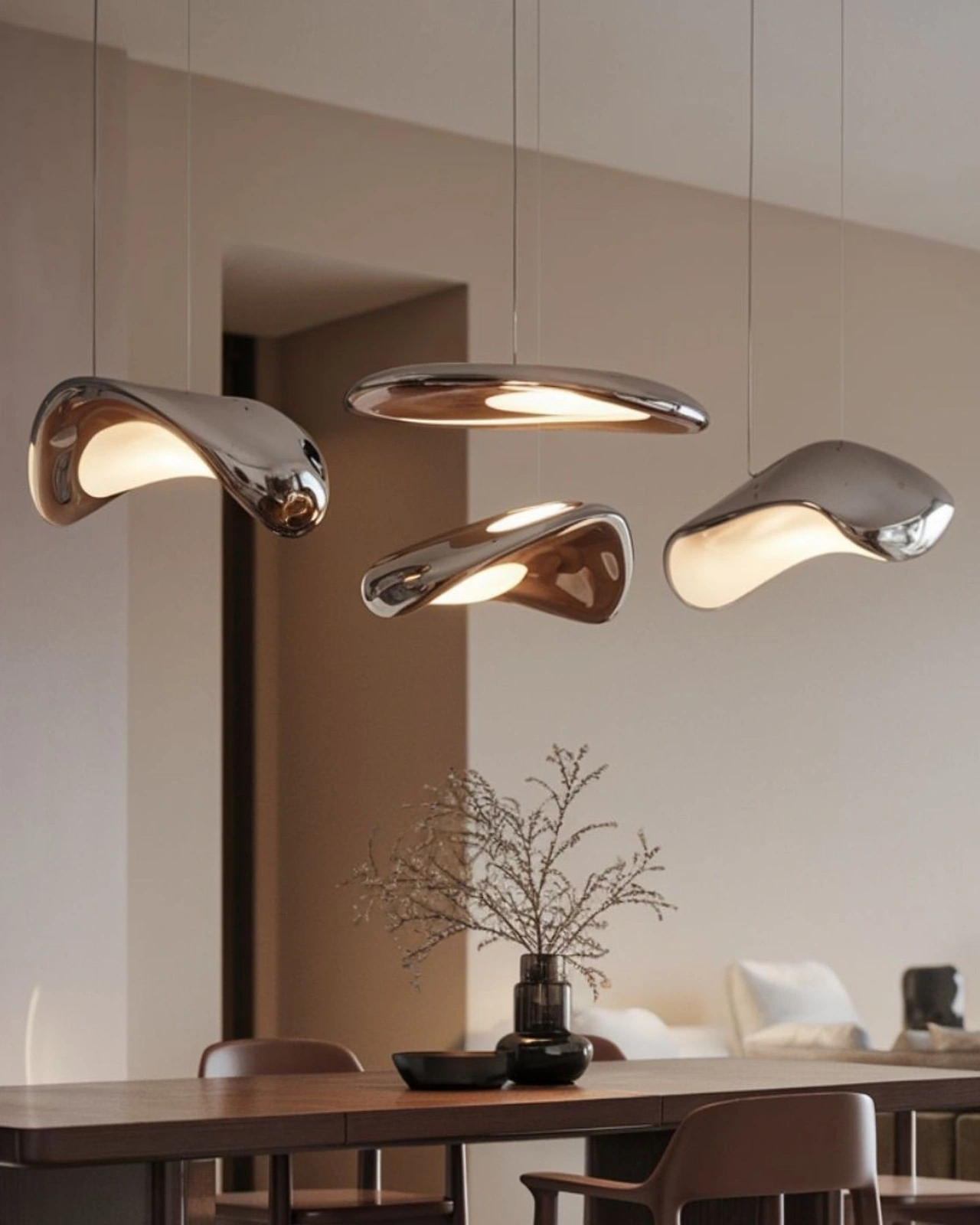
AI-modified editorial reference, as labeled by the source: a group of reflective pendants at different heights above one table. Not a B&Co. project.
A group of pendants can have a clear relationship to the table even when its individual forms sit at different heights. Review the group from the side as well as from the end. Then have the team document the agreed position against fixed room features. A note that says “center over dining” leaves the person setting out the ceiling to decide what dining means.
Leave a record for the next table
Keep the approved furniture outline with the ceiling drawing. Add a short note about which change the arrangement can absorb: a table that extends, a different shape, or a turn in orientation. If a possible change would call for moving the light, make that part of the decision now. There is no need to design around furniture that has not been chosen; there is a reason to know which choices will be tied together.
B&Co. Design | Build brings design, construction and material selection into one coordinated process. The dining pendant gives that idea a small, practical test: the furniture plan, the view across the room and the point marked on the ceiling should describe the same arrangement. Approve the point after you can see the table beneath it.