Begin with the evening brief
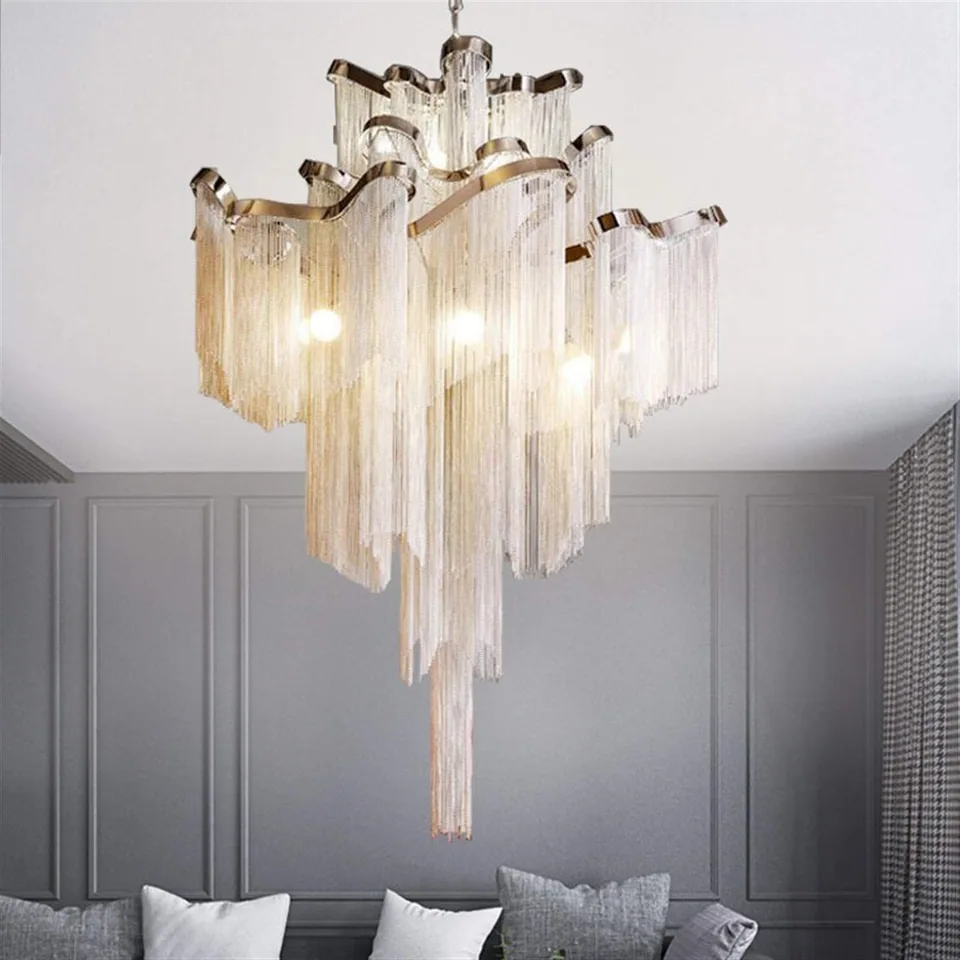
The opening visual study presents a tiered chain chandelier illuminated above a gray paneled room. The fixture has a commanding silhouette, but the image is not identified as a Beyder&Co. project, a verified installation, or evidence of lighting performance. Its useful question is compositional: what did the room need after sunset before this object entered the frame?
Begin by writing an evening brief for the room. Name what happens there when daylight is no longer carrying the view: arriving, crossing the room, reading, preparing something, gathering, looking toward art, or settling into a quieter corner. Then mark which surfaces, paths, and objects must remain legible for those moments. A room can require several different evening scenes without asking every light to be on at once.
B&Co. Design | Build describes design as architecture and interiors resolved together, with materials specified from day one. Its published process asks the team to resolve the room, the light, and the material together. That is the right order for an evening brief. Light belongs in the spatial decision while ceiling lines, openings, millwork, furniture positions, and finish fields can still answer it.
Give light an address
Give each need a place before assigning it a fixture. Instead of writing ‘pendant’ at the center of a plan, mark the table that needs presence, the passage that needs a clear destination, the wall that should hold the far view, and the seat where a book should remain readable. The drawing becomes a map of where light should arrive rather than a shopping list of objects.
Now read that map against the architecture. A ceiling may offer a center, a rhythm, or no useful focal point at all. A paneled wall may be meant to remain quiet while a niche carries attention. A long room may need a sequence rather than one dominant moment. Place the emphasis where it helps the room make sense after dark, including what should recede as carefully as what should be seen.
Choose the evening scene first; let the fixture earn its place inside it.
The result should be reviewed as a scene, not only as dots and symbols. Stand at the entrance, the principal seat, and the point where one room opens toward the next. Ask what appears first, what supports it, and where the eye can rest. This turns illumination into part of arrival and movement, with a hierarchy that the decorative objects can later express.
Read the surfaces after dark
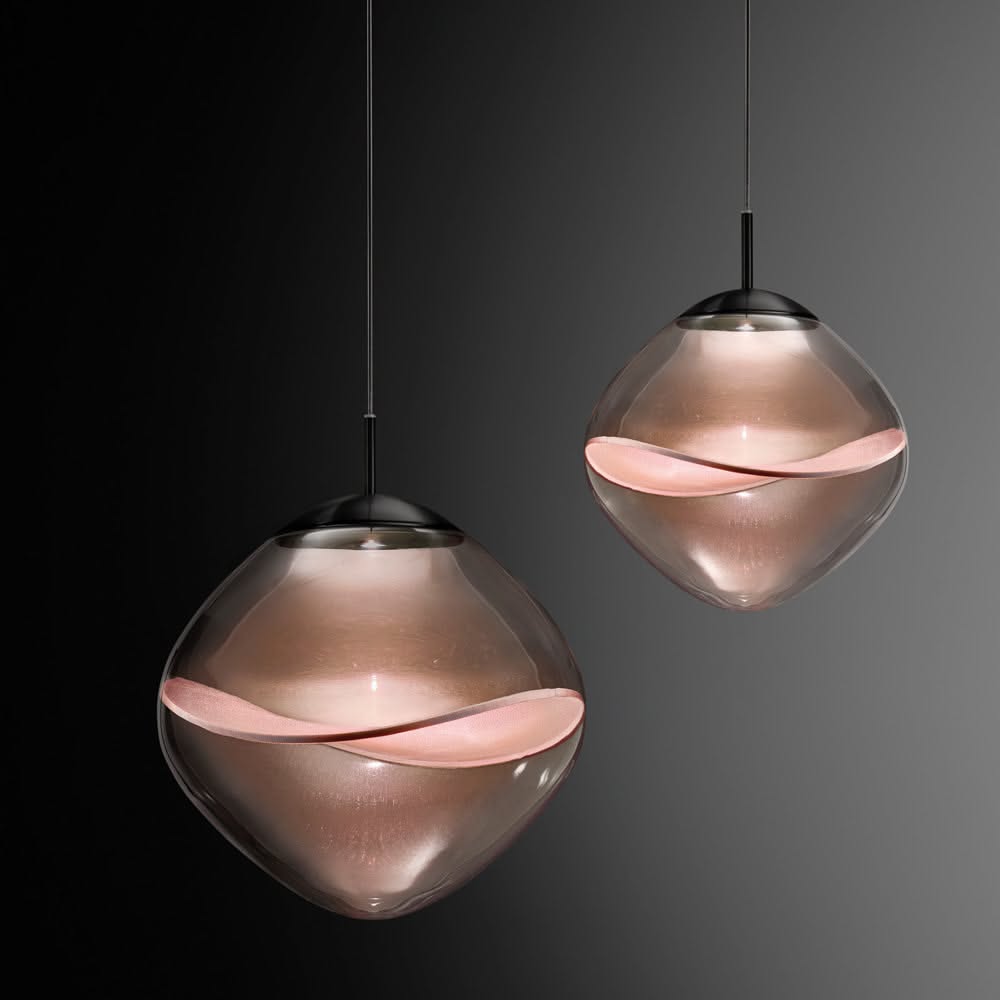
The second visual study shows two suspended glass pendants glowing against a black-to-gray background. They are presented as a separate visual study, not as products specified by Beyder&Co. or proof of a built condition. The isolated view is useful because it exposes the relationship among luminous glass, dark field, spacing, and silhouette without pretending to settle a room around them.