On Comparison
Hold the View Steady
B&Co. Design | Build · September 28, 2026 · 4 min read
A comparison should make the cause of a preference visible. Hold the viewpoint, crop, scale, light, and surrounding information steady, then change one condition. When the frame moves too, the images may still inspire, but they no longer isolate the decision.
Start with a common frame
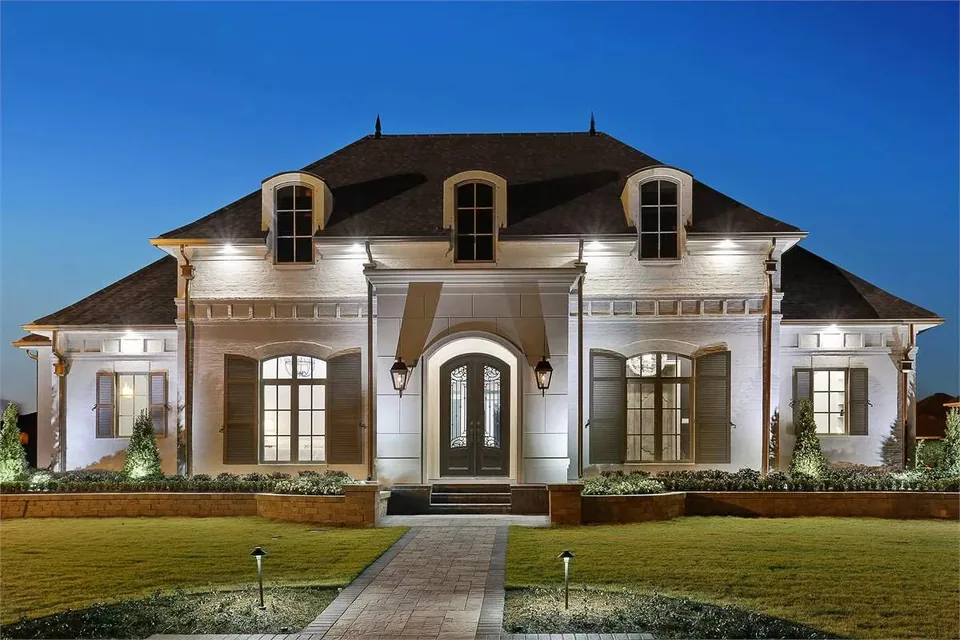
The opening image is presented as a visual study. It is not identified as a B&Co. project, a record of built conditions, or comprehensive approval evidence. Its frontal composition can prompt observations about symmetry, approach, arched openings, and evening atmosphere. On its own, however, it offers no controlled alternative against which any one of those choices can be judged.
B&Co.’s published integrated-project presentation includes the same front elevation in daylight and evening views. Because the building and viewpoint remain recognizable, the change in light can be read directly. That is the useful structure of a comparison: establish a common frame, preserve it, and let the chosen variable become easy to see.
The common frame may include viewpoint, crop, image size, time of day, surrounding landscape, and the amount of context shown. Which elements must stay fixed depends on the question. If arrival is under review, preserve the approach. If facade proportion is under review, preserve the camera position and scale. Set those controls before producing the alternatives, not after a favorite image has already emerged.
Change one condition
When the question concerns an opening, change the opening while leaving the wall, viewpoint, light, and neighboring elements in place. When it concerns a facade material, keep the geometry and setting steady. When it concerns evening light, preserve the building. A comparison becomes more useful as the design change grows easier to name.
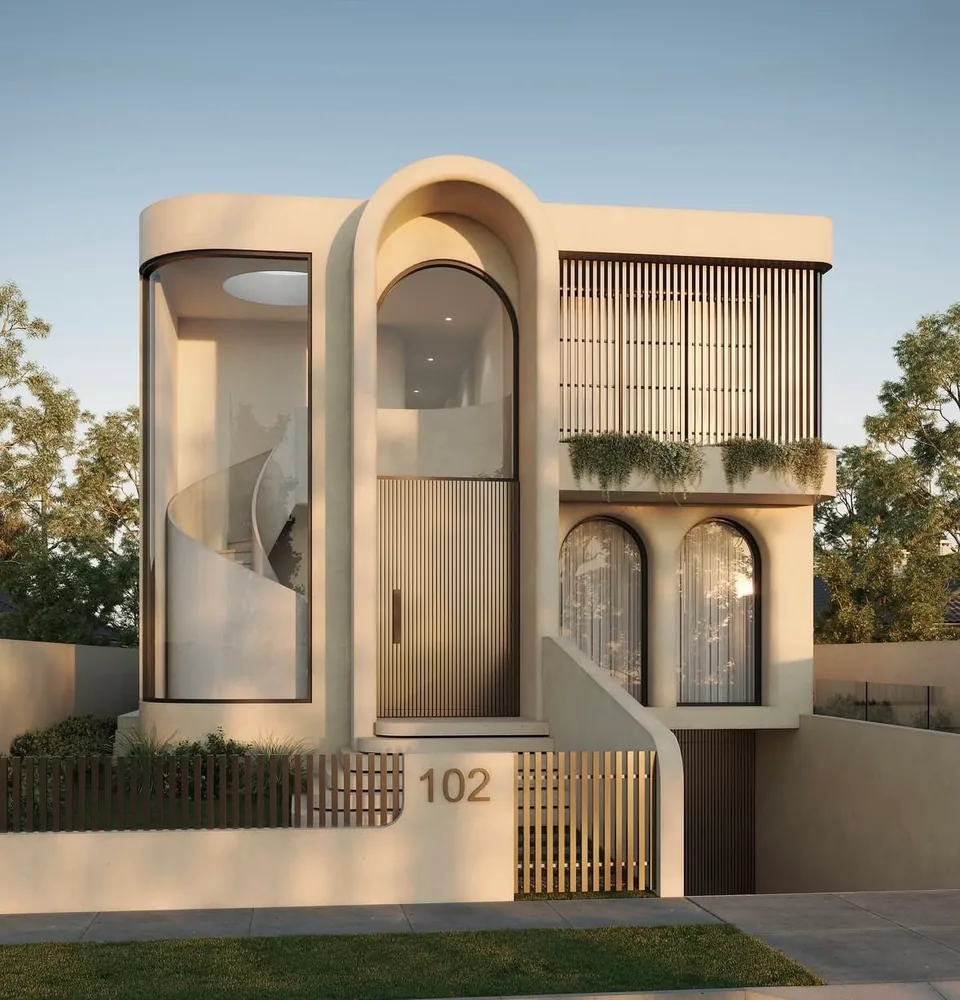
The second residence image is another separate visual study. It does not depict the same property or project as the opening image, and it is not proof of built conditions. Its arched openings, curved stair volume, vertical screens, and rounded entry wall can support a discussion of form. Placed beside the first study, it broadens the visual vocabulary, but it does not create an option A and option B for one design decision.
Hold the frame steady, then let one decision move.
Several conditions often shift without being announced. One image may be wider, brighter, closer, more complete, or surrounded by more appealing information. Record what is meant to remain constant and what is meant to change. That short note keeps the comparison honest when new versions arrive and makes an accidental difference easier to detect.
Read the difference, not the drama
A polished view can win attention for reasons unrelated to the choice at hand. A deeper sky, warmer light, lower camera, or cleaner crop may make one option feel resolved before its design difference has been considered. Mood is valuable, but it should not become an unnamed vote. First read the controlled difference. Then return to atmosphere as its own question.
Show the alternatives at a consistent size and from a shared position. Side by side can reveal broad changes; an overlay or quick alternation can expose smaller ones. The review question should be equally specific: which opening gives the entry the intended proportion, which edge clarifies the massing, or which light level keeps the elevation legible after dark? A precise question gives the eye a place to work.
If the reason for a preference remains difficult to state, simplify the comparison. Remove a background change, align the crop, or prepare one additional view in which only the disputed condition moves. The need for a cleaner study is useful information. It is better to make the uncertainty visible than to assign it a confident explanation after the fact.
Give the comparison an exit
A decision record can be brief: the question asked, the elements held constant, the condition changed, and the reason one direction was selected. This turns the images into a traceable step rather than a gallery of preferences. It also defines the comparison’s limit. A choice about lighting does not quietly become approval of every detail shown in the scene.
After one condition is settled, the next comparison can begin with that choice held steady. The sequence advances without forcing every issue into one image. Each study gains a clear entrance and exit: what it was built to test, what changed because of it, and what the next study must preserve.
A comparison has done its work when the reason for the decision survives the presentation. Keep the frame steady enough that the cause of the preference remains visible. When that control is absent, call the images what they are—separate studies—and make the next review a true comparison.