
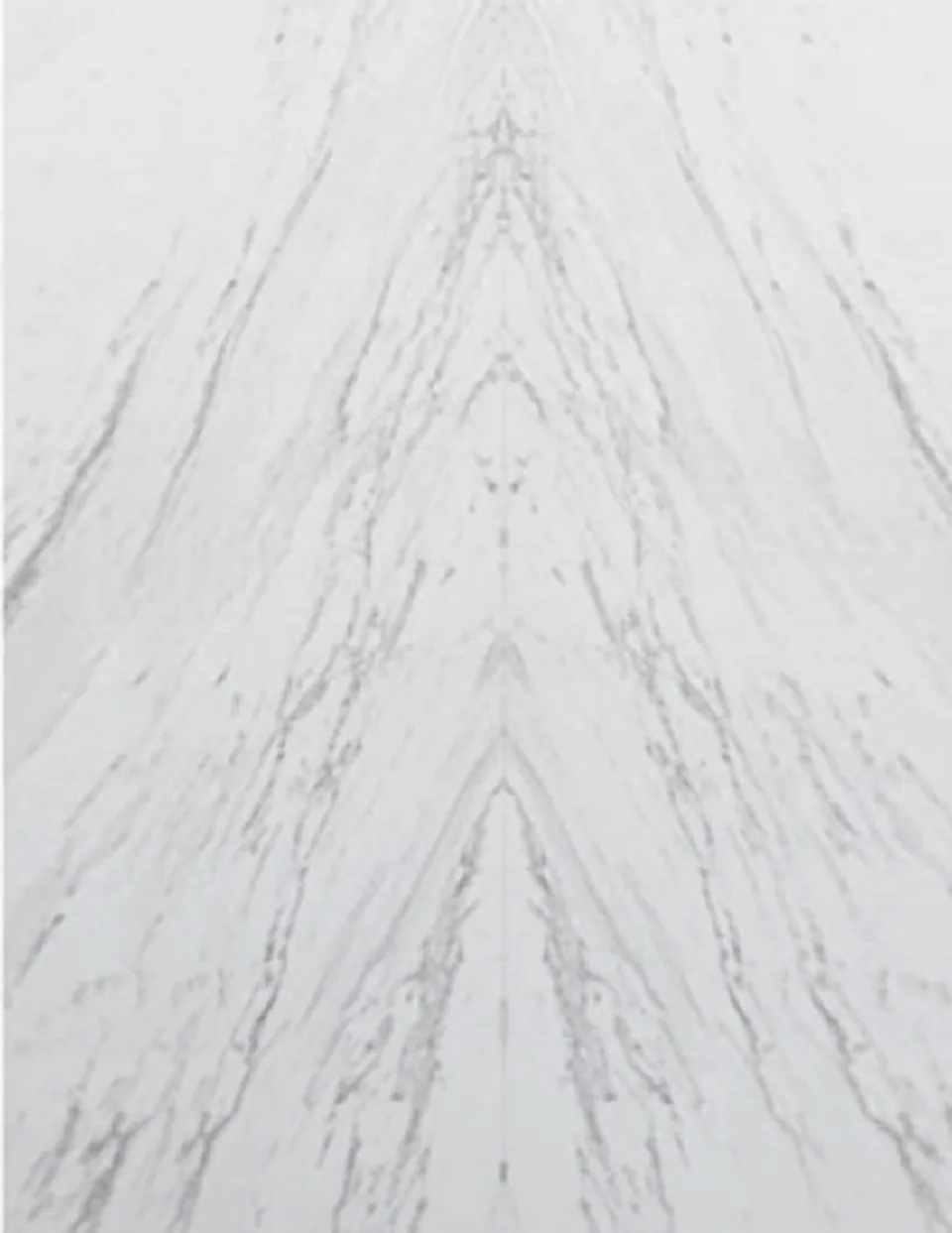
A Photograph Averages
A catalog image is a fair thing and a lie of omission at once. It shows you a stone, but it shows you one stone standing in for a hundred — each with its own grain, its own drift of color, its own way of catching light. Marble and quartzite are not printed to a spec; they are cut from a mountain, and no two blocks are the same. To choose from a photograph is to accept the average and hope the piece you receive lands near it.
The pieces that make a room are rarely the average. A slab is chosen for the way one vein carries across its face, for the movement that will run unbroken across a countertop or up a wall. That decision cannot be handed to a thumbnail. It is made in front of the material, with the light moving across it, at the scale the stone will actually be used.
A stone is not specified. It is chosen — from the block it was cut from.
What the Hand Knows
Selection is not only a matter of the eye. A honed edge drags differently than a polished one; a leathered finish reads warmer under the palm than it ever does to a camera. These are the properties a person registers first, usually without naming them, when a hand crosses a counter or a bare foot meets a floor. They are decided at the slab yard, not on a screen.
This is why B&Co. Surfaces works the way it does: stone reviewed in person, slab by slab, veining matched across a project before anything is cut. The material is seen, touched, and priced before it is ever specified — so the piece that arrives is the piece that was chosen, not its distant cousin.