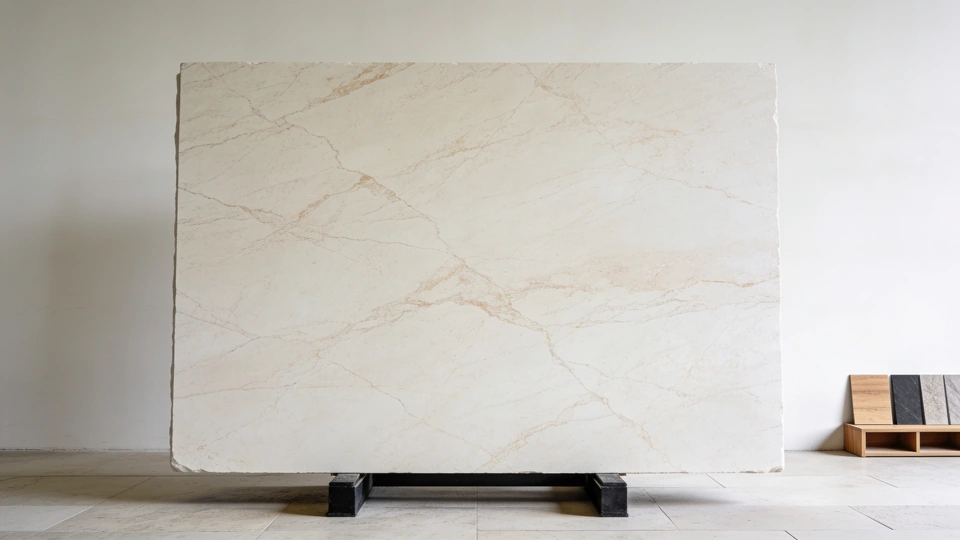
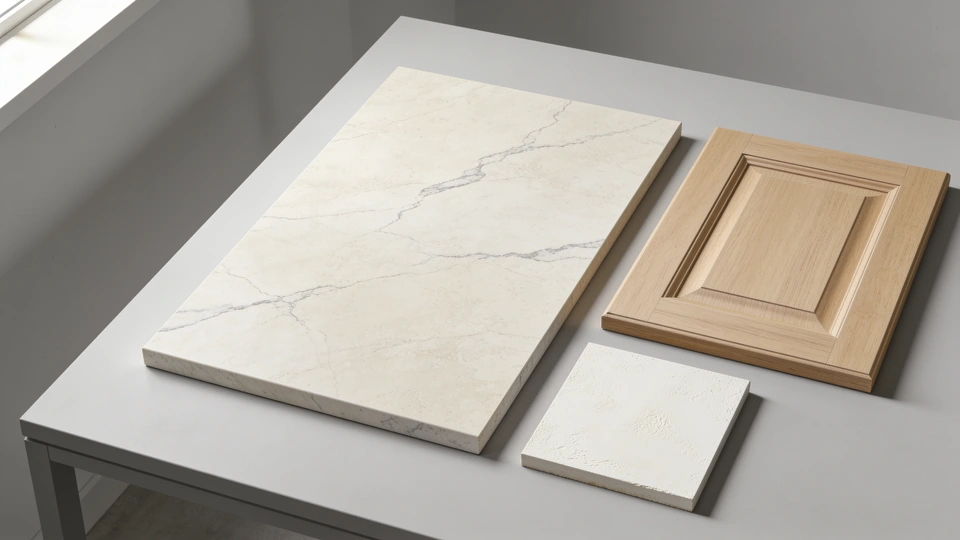
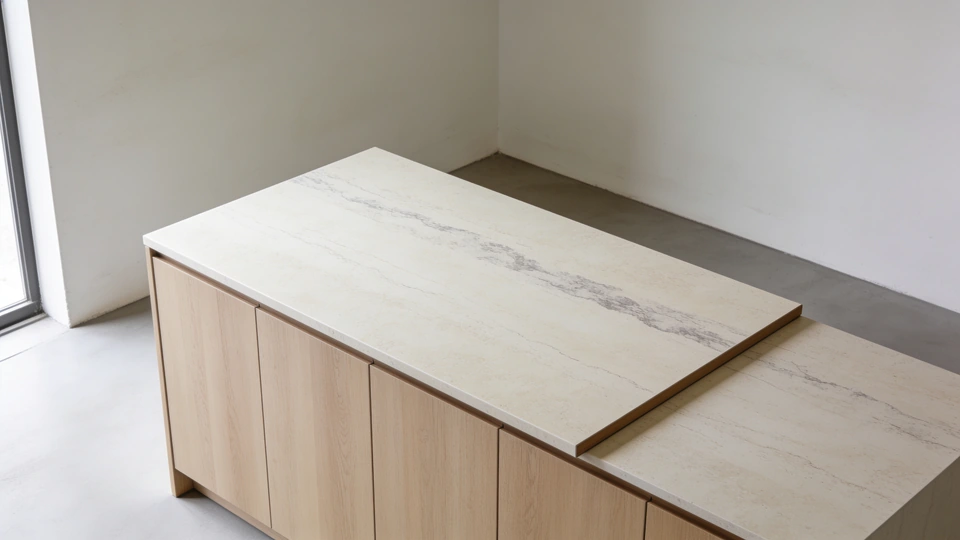
AI-generated illustration: an imagined slab-selection studio, not an actual product, listing or completed project.
Approve natural stone by identifying the actual material and reviewing how it will be used. Carry the slab photographs, accepted variation and proposed layout together, so a preference for a sample becomes a clear decision about the finished surface.
Give the sample a precise job
Begin a selection meeting by naming what remains open. The material may suit the palette while its pattern still needs review. A finish may feel right while the actual supply remains unidentified. Write those distinctions beside the selection rather than allowing the word approved to cover every question. The useful outcome is a decision the next person can understand without having attended the meeting.
The Natural Stone Institute’s Use Natural Stone guide recommends visiting the actual slabs, where color and movement can be assessed across the surface, and bringing neighboring finish samples. Read on October 31, 2026, that guidance establishes the starting point. Bring the cabinet finish and other relevant materials into the discussion; keep the small stone sample as a reference to the palette, with the full slab still available for inspection.
Ask the supplier to identify the material being considered and explain how the selection will be recorded. Attach the relevant photographs to that record. If a photograph shows a piece that is no longer available, return to the selection itself. Avoid carrying an attractive reference image forward as though it identifies the stone reserved for the work.
AI-generated material study: stone, oak and a pale finish considered together; no particular product is identified.
Make the acceptable variation visible
Stone Federation Great Britain’s guidance on sample panels, read October 31, 2026, explains how range and control panels communicate geological variation. Its advice concerns stone selection across a supply, rather than a promise that every piece will resemble a favored sample. Use that distinction to sharpen the conversation: ask what range the proposed material represents, then identify which characteristics the design should accommodate.
Describe the preference in observable terms. A quiet field with occasional strong movement is a different brief from a surface chosen for continuous drama. Mark the parts of the actual stone that prompted the choice and discuss the areas that raise questions. Ask the stone professional to distinguish natural character from an issue that needs technical assessment; an editorial preference cannot settle suitability.
An approval should identify the stone, the decision and the questions still open.
Review the proposed pieces together
Before fabrication is released, request the project’s proposed layout and ask the fabricator to explain it beside the selected material. Follow the main surface, then the adjoining pieces. Discuss the direction of the pattern and the proposed joints in relation to the room. Ask which decisions are settled and which remain subject to field measurement or the fabricator’s technical review.
Southeast Stone’s published templating and installation FAQ, read October 31, 2026, provides a useful example of why that distinction matters. The fabricator describes reviewing seam locations during templating and reserves the ability to move them around material irregularities. That is its own procedure, not a universal contract. Ask the appointed fabricator how revisions are handled on this project and what requires renewed approval.
Keep design intent and technical confirmation legible on the same record. If the proposed arrangement changes, ask for the affected drawing or image to be replaced and the change identified. A verbal reassurance is difficult to compare with the finished work. A dated, clearly described revision gives the discussion something specific to return to, without treating a rendering as an installation instruction.
AI-generated material composition: layered stone planes over oak, not a fabrication drawing or completed project.
Carry the decision into the room
As an editorial approach for B&Co. Surfaces, assemble the material identity, selected views, adjoining finishes and reviewed layout in a compact approval record. Include the outstanding questions and who must answer them. Give that record a clear date and retain the superseded version when the proposal changes. This is a recommendation for making decisions traceable, not a claim about a particular commission or supplier’s terms.
The full slab and the material study shown here are AI-generated illustrations, as is the layered stone composition. They explain different scales of attention and identify no actual product, property or completed project. For a real selection, replace such concepts with the actual stone and the project’s reviewed information. Release the work when the material you have chosen and the arrangement you have approved can be found in the same record.