On Daylight
Light Is a Material
B&Co. Design | Build · November 18, 2026 · 4 min read
Every material in a house is chosen, except the one that arrives free each morning. Daylight is specified or it is wasted: where it enters, what it lands on and which hours it serves are decided before any finish is picked — and they decide the room first.
A renovation brief usually starts with surfaces: the stone, the oak, the tile, the paint. Light enters the conversation late, if at all, as if it were weather — something a room receives rather than something it is built from. That ordering is backwards. The finishes are the part of a room you can change in a season. The light is the part set by orientation, window placement and plan, and it governs how every chosen surface will actually look for as long as the house stands.
The audit comes first
The audit is unglamorous and decisive. Walk the house room by room at the hours the household actually lives in it — morning in the kitchen, afternoon in the living rooms, evening in the private rooms — and record four things: where the light enters, what it lands on, where it glares or dies, and which artificial light is quietly compensating for it. The U.S. Department of Energy's daylighting guidance makes the same point from the building-science side: daylight is a design input, planned with the plan, not a finish applied at the end.
What the audit produces is a keep list for light, exactly as a preservation read produces one for fabric. Openings that work are protected. Rooms that borrow light are named as borrowers, so no later decision pretends otherwise. And the rooms that fail are failed honestly, before money is spent dressing a lighting problem as a decorating one.
The Margo evidence
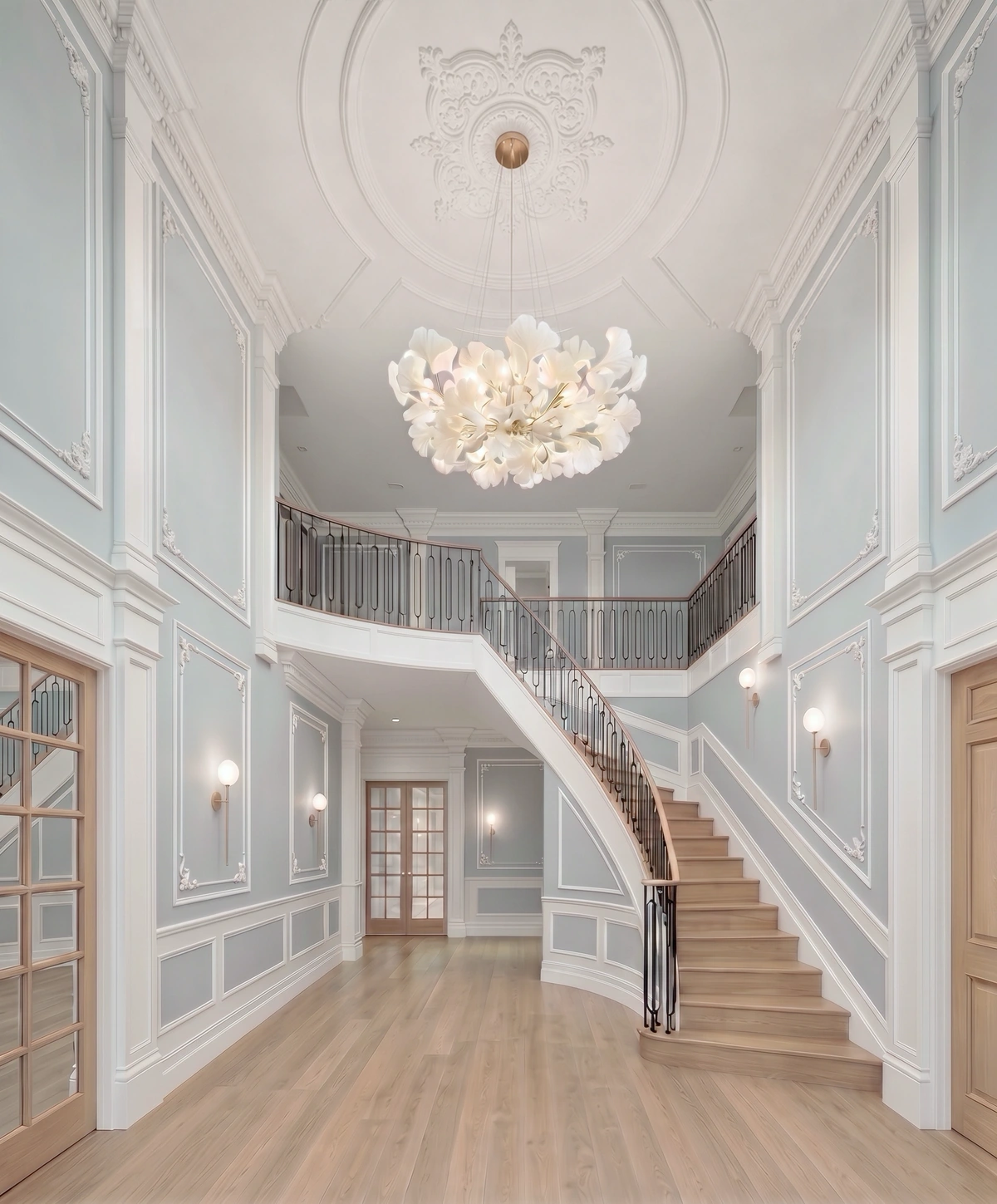
At 11 Margo Way in Alpine — a 2007 brick Colonial of 9,027 square feet on 2.35 acres, where B&Co. Design | Build renovated the kitchen, the fireplace mantel and all the bathrooms — the light was already doing composed work, and the commission's job was to answer it. The two-story foyer is gathered under its sculptural chandelier, daylight from above and composed light after dark sharing one vertical room. In the living room, French doors pull daylight across the room to the reframed mantel, so the wall the eye is meant to rest on is the wall the day reaches first.
The private rooms make the same argument at a quieter volume. In the primary suite, windows flank a natural stone fireplace, so the room's focal wall is lit symmetrically rather than spotlit. The primary bath sets a freestanding tub in a bay of windows, with natural stone vanities and tile underfoot — a wet room planned around daylight instead of sealed against it. None of these are accidents of a generous lot. They are placements: window, fixture and material decided together.
Light beside stone and oak
This is why light belongs in the materials conversation at the B&Co. Surfaces library in Closter, on the same table as the stone and the oak. A natural stone approved under flat showroom light can go cold in a north-facing room and glow in a west-facing one; a rift-cut white oak floor reads calm or busy depending on the hour it is seen. Specifying a material without its light is specifying half of it. The sample has to be judged where it will live, at the hour it will be used.
A room is not finished when its materials are chosen. It is finished when its light has been.
Before you list, before you renovate
For a seller, the audit is a showing discipline: the photograph and the appointment should meet the house at the hours its rooms were composed for, and a room that borrows light should be presented honestly rather than flooded with lamps at noon. For a buyer, it is a second-visit discipline: return at a different hour from the first viewing, and let the house re-argue its case in a different light before the number is argued about.
Stone can be re-cut and oak can be refinished. The day cannot be moved. A house read for its light first — and renovated, listed or bought on that reading — is a house whose materials were chosen with the one material that was never optional finally treated as one.