On Preservation
Built in Another Century, Composed for This One
B&Co. Design | Build · November 17, 2026 · 4 min read
An older house arrives with its decisions already made — the proportions, the plan, the way light was invited in before electricity argued otherwise. Working with one is not a contest between centuries. It is a sequence: read what the house already does well, protect it, and recompose only what time has genuinely loosened.
The temptation with a period house is binary — freeze it as a museum, or gut it into a new house wearing an old facade. Both refuse the actual work, which is discrimination: telling the difference between what the house's age has made valuable and what it has merely made old.
What a century settles
Some decisions improve by surviving. Proportion is one: ceiling heights, window rhythm and room sizes in a well-built colonial were settled by use over generations, and they are the hardest things to retrofit into a new plan. Plan logic is another — principal rooms sequenced for arrival and gathering, private rooms gathered apart. Light is a third: windows placed before artificial light could compensate were placed where the day actually moves. It is the premise behind the federal guidance on treating historic fabric, the National Park Service Preservation Briefs: read the building first, and let the reading govern the change.
None of this is nostalgia. A settled proportion is not valuable because it is old; it is valuable because it still works — because generations of use tested it in ways no rendering can. The read comes first precisely so that sentiment does not have to: what survives scrutiny stays, and what does not is free to change.
The Berkery test
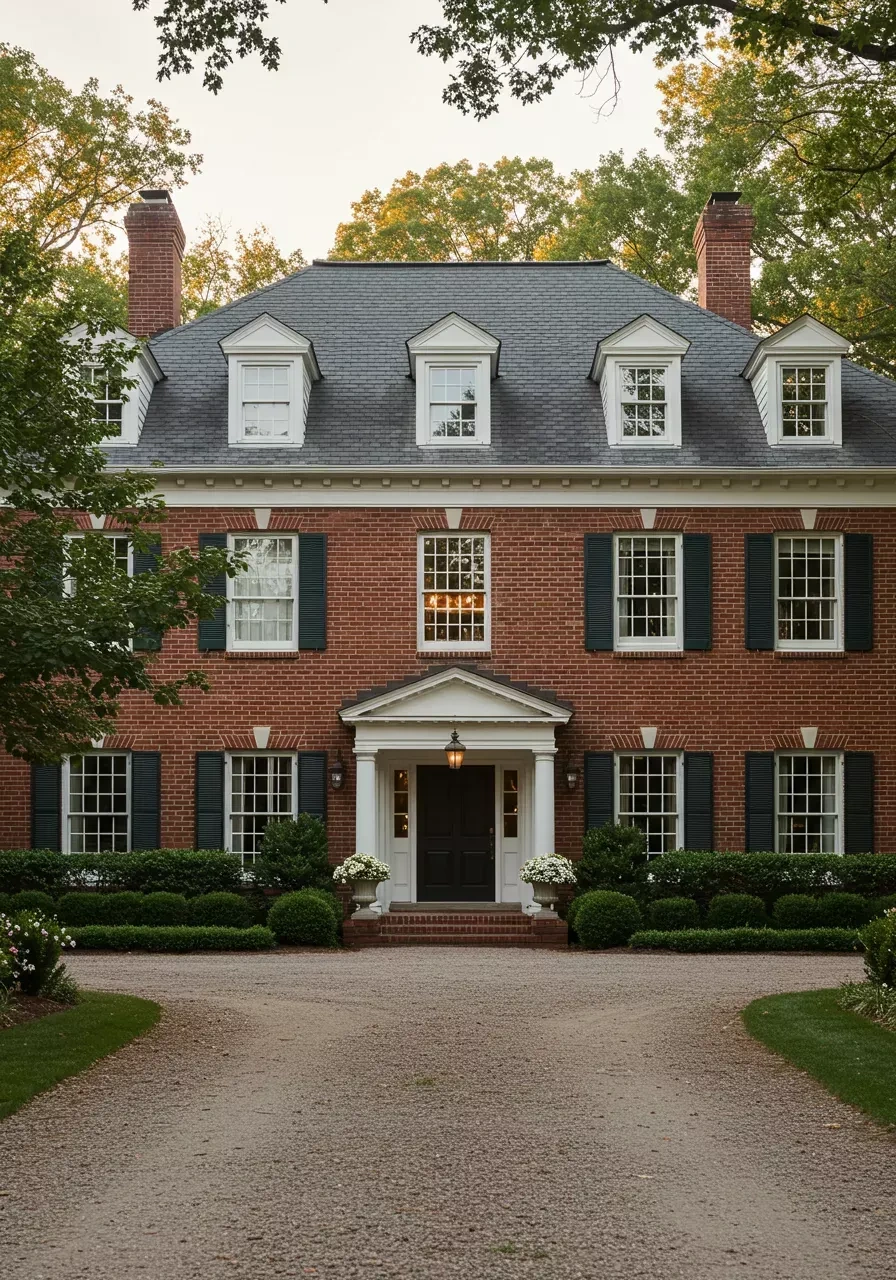
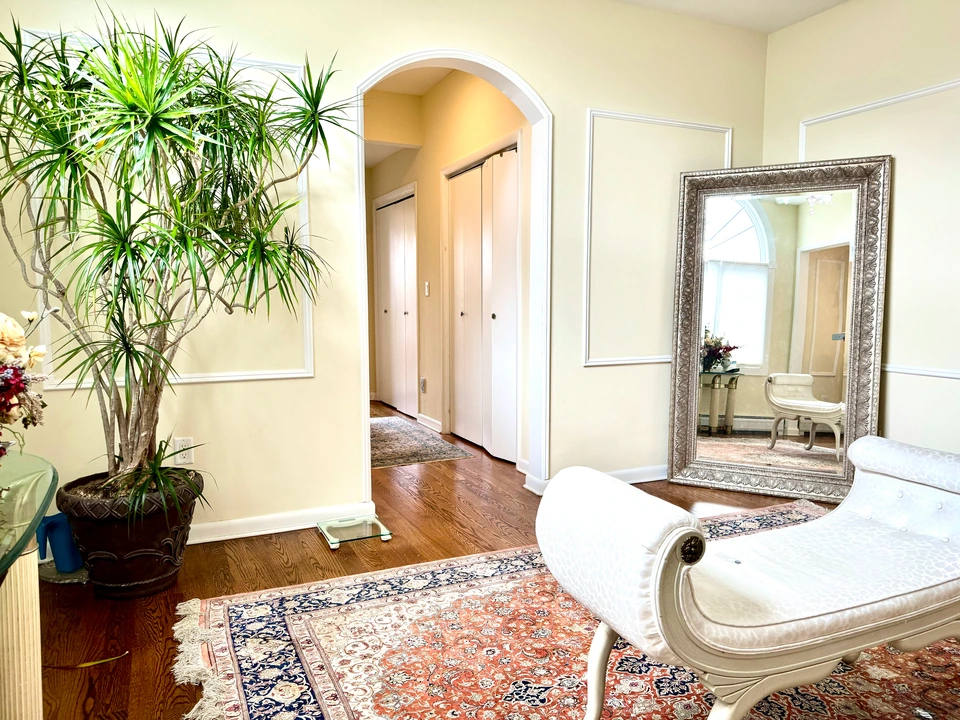
On Berkery Place in Alpine, B&Co. Design | Build was commissioned for design alone on a colonial of roughly 5,300 square feet on a fenced half-acre: a formal living room with fireplace, a formal dining room, a family room with breakfast area, and a generous kitchen; upstairs, a primary suite with high ceilings and its own sitting room; and a fully finished lower level. The composition was never in question — what had drifted was the interior's coherence: furniture placed where it landed, finishes chosen one at a time across years, art hung where a nail already was.
Preserve, then recompose
The order matters. First the keep list, written down: the proportions, the plan, the fireplace, the light — the elements any new work must answer to. Then the edit: what leaves each room before anything enters it (the firm's rule is clarity over clutter). Only then composition — furniture at the scale the rooms ask for, finishes specified through the B&Co. Surfaces library in Closter against what the house already holds, light managed as a material, art placed where the architecture gives it a reason to be.
Sequence is what separates composition from shopping. A room filled before it is read inherits every accident of its past; a room emptied to its keep list shows its own instructions — where the light falls, where the eye rests, what the fireplace wall is asking the seating to do. The recomposition then has something to answer to besides taste, and taste, given an architecture to answer to, usually rises to it.
Preservation is not the refusal to change a house. It is the discipline of changing only what the house has not already decided well.
When the answer is construction
A framework is only honest if it can return the other verdict. Where structure, systems or the plan itself fail the household, design alone is decoration over a problem — and the same read that protected Berkery's interiors is the read that tells another house it needs renovation or rebuilding. The discipline is identical; the scope is whatever the house, read closely, actually asks for.
A period house composed this way keeps its century and gains its present — rooms that read as one idea, held inside architecture that was already an idea. That is the work: not rescuing the old house from its age, and not apologizing for it, but composing for this century on the terms the last one set — carefully, room by room, and in the right order.