

Home Realty Design | Build Surfaces Journal Origins CloseQalc Connect

On Timing

Before, Soon, Eventually

Front dusk view of a white two-story residence with vertical screens, pale block-patterned lower walls, palm trees, and a driveway descending to a brown slatted garage door

When a property suggests a long list of possible work, sort each item by its decision horizon: before the planned use begins, after the space can be observed in use, or only if the preference still matters later. The list becomes clearer when timing carries as much weight as visibility.

Separate possibility from sequence

The opening image is presented as a visual study. It is not identified as a B&Co. project, a record of built conditions, or evidence of a particular location. Its screened upper level, pale block-patterned lower walls, illuminated central glazing, and descending drive can prompt immediate reactions about arrival, privacy, light, and use. Reactions become useful after they are translated into scope and sequence.

B&Co. Realty’s published practice description brings property search together with design-build and materials insight to clarify a property’s potential and the work it may require. The useful word is potential. Seeing a possible change does not make that change a prerequisite. Before evaluating the length of the list, decide when each question actually needs an answer.

Three horizons are enough to begin: before the planned use, after direct observation, and later if the preference remains. They assign neither cost nor importance. They simply stop the most visible idea from becoming the most urgent by default. Every item gains a place in time before it competes for attention.

Define the first usable day

Reserve the first horizon for decisions that need resolution before the property can support its intended use, or before another committed choice depends on them. Use dependency as the test. Does one proposed change determine the layout around it? Would choosing a finish now close off a still-unresolved direction? Is the question about what exists, or about what someone might prefer to add?

Keep unknown conditions separate from proposed work. A photograph can identify what deserves a closer look, but it cannot diagnose the condition behind the surface. Record the unknown, name the evidence needed, and avoid assigning a deadline until that evidence exists. This prevents an imagined solution from disguising an unanswered question.

Write each first-horizon entry as a specific decision. Instead of “redo the entry,” ask what the entry must accomplish on the first day of use and which verified condition prevents that result. The narrower sentence exposes whether the work belongs now, whether it depends on another answer, or whether it can move to a later horizon.

Let observation earn the next decision

The bathroom image is a second, separate visual study. It is not the same property as the opening image and is not presented as proof of existing conditions. The centered tub, paired vanities, mirrors, lighting, ottoman, and framed view can make the room feel like one resolved composition. Yet each element answers a different question about movement, storage, light, proportion, and daily use.
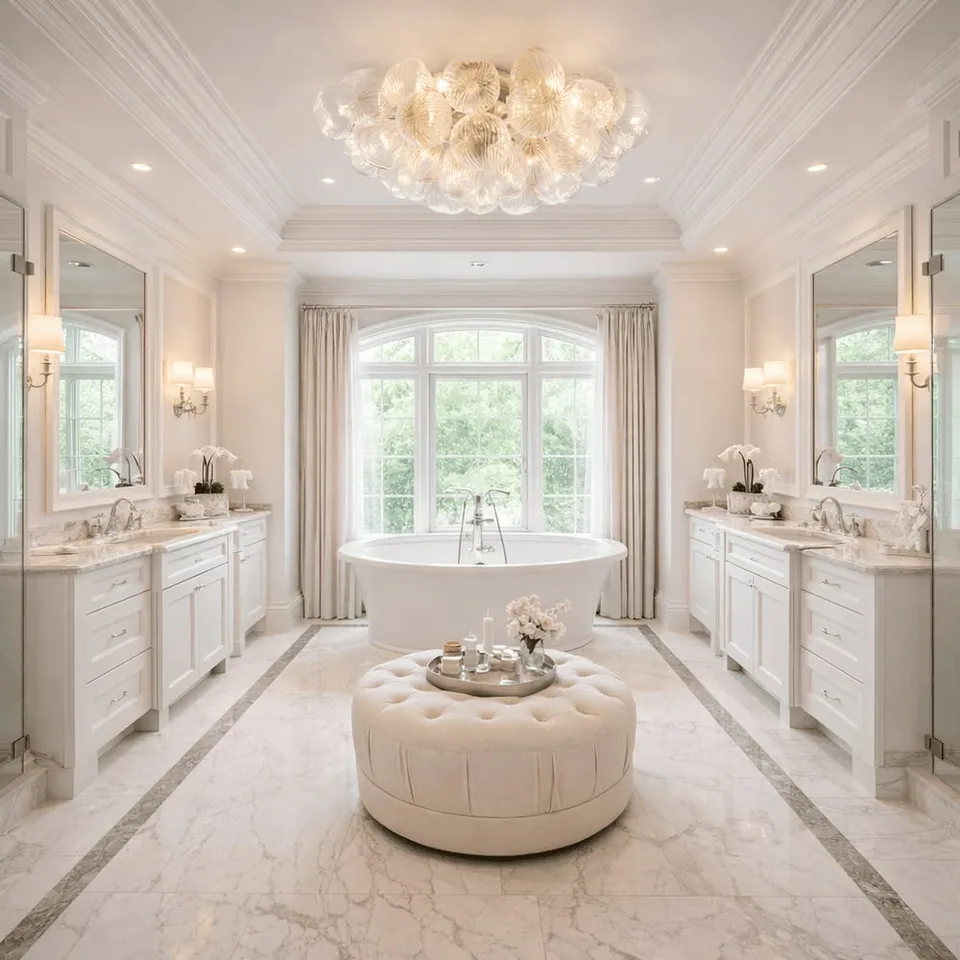
Symmetrical white bathroom with paired vanities, wall mirrors, a freestanding tub beneath an arched window, a round tufted ottoman, and a clustered translucent ceiling fixture
A long list becomes useful only after every item has a decision horizon.

The second horizon is for decisions that can wait while the space is observed under the routines it is meant to support. Waiting should have a purpose. Name what will be watched: the route through a room, the storage that is reached most often, the light at the times the space is used, or the point where an arrangement repeatedly interrupts the intended sequence.

Give each deferred item a question and a trigger for review. If the concern repeats, it returns with evidence. If it does not, the item may shrink, change, or disappear. The list becomes more accurate as the property is understood.

This horizon also protects coordinated work from premature detail. A material choice may be appealing in isolation but still depend on dimensions, adjacent finishes, or a layout that is not settled. Keeping the dependency visible allows B&Co. Design | Build and B&Co. Surfaces to enter the question when the surrounding decisions are ready to support it.

Keep later genuinely optional

The third horizon holds preferences that have no current dependency. A possible change can remain valid without becoming a commitment. Write down why it appeals, then leave room for the property to challenge that first reaction. The original feature may prove useful, another decision may absorb the concern, or the preference may persist with greater clarity.

Give optional work an honest trigger rather than an invented deadline. Revisit it if the intended routine changes, if adjacent work brings the question back into scope, or if the same preference remains after the earlier horizons are resolved. An item without a trigger can stay off the active plan. Removing it is also a decision.

Before, soon, and eventually form a living map that can leave some ideas unfinished. The map should change when verified conditions, intended use, or dependencies change. A sound first plan makes timing explicit enough for each decision to arrive with the evidence it needs.

← All of the Journal Begin a Conversation →