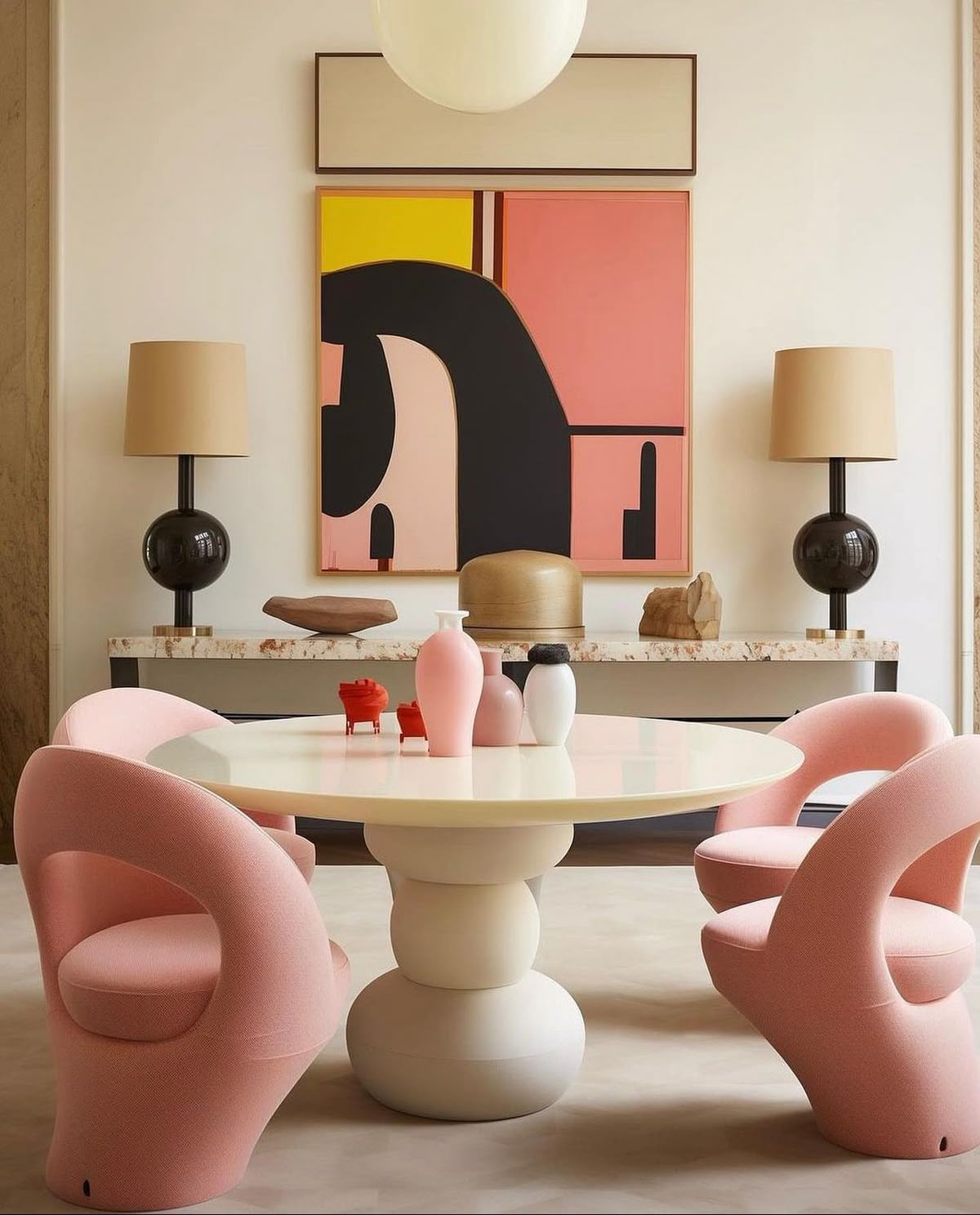
AI-modified editorial reference, as labeled by the source: artwork viewed with the dining table, lamps and surrounding objects.
Plan a wall for the artwork you intend to display, then judge it from within the room. Establish the work’s dimensions and care needs before approving the finish, lighting and mounting. A blank rectangle on a drawing is only the beginning of that decision.
Begin with the work
A drawing marked art leaves almost every useful question unanswered. Is there a particular piece, or a place reserved for something not yet chosen? Does the recorded size include the frame? Will the object sit close to the wall or project into the room? Write down what is known and leave the rest visibly unresolved. A placeholder should not quietly become an installation instruction.
For an existing work, assemble a brief with its outer dimensions, a clear reference image and any instructions supplied with it. Ask the appropriate specialist to confirm its handling and mounting requirements. For a future acquisition, keep the proposal flexible. Do not commission a tightly fitted recess around an imagined object unless that restriction is a deliberate part of the brief.
See the wall from the room
The dining-room reference places a graphic composition behind a table, between lamps and beneath a pendant. Its usefulness is the relationship it makes visible: the artwork shares the view with furniture and objects. It is an AI-modified design reference, not a documented installation or evidence of how an identifiable artwork should be displayed.
Test the intended position with a temporary outline representing the full framed dimensions. Look from the entrance and the usual seated position. Include the furniture that will actually remain. Ask whether a lampshade interrupts the view, whether a console leaves a usable interval beneath the frame, and whether the surrounding objects are part of the composition or simply occupying its space.
Approve the place the work will occupy, not just the rectangle it fills.
Keep the test reversible and review it before treating a preferred height as settled. A photograph of the whole room can help record the decision, but return to the room before approving it. If the work has not been acquired, label the outline as a proposal. That small distinction keeps the finish drawing honest about what has actually been chosen.
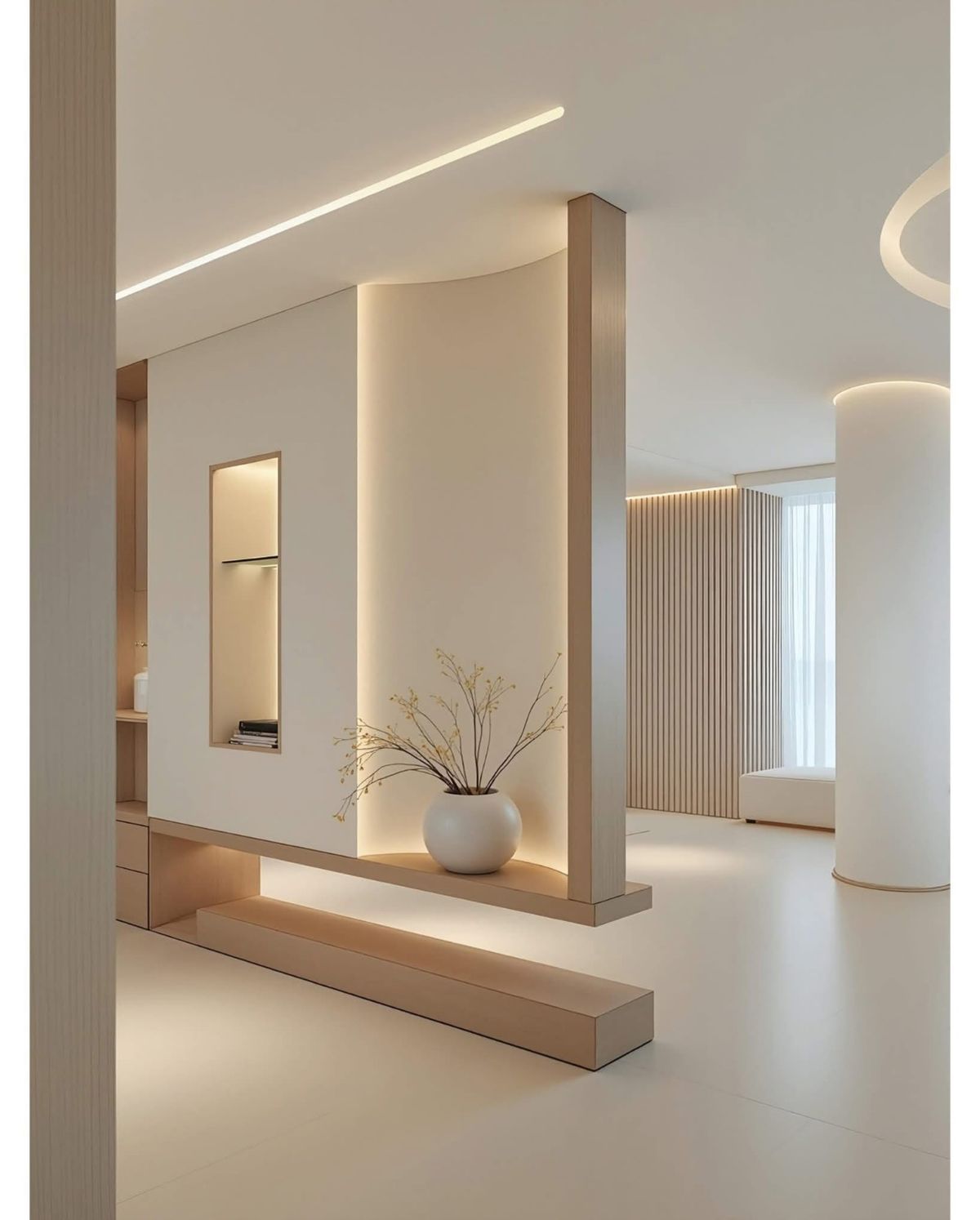
AI-modified editorial reference, as labeled by the source: a niche, shelf and integrated light already shape the wall.
Let care inform the position
The Canadian Conservation Institute’s Basic care – Paintings, read November 4, 2026, advises keeping paintings out of direct sunlight throughout the day and considering accidental contact or splashes when choosing a display location. Its guidance concerns paintings; it does not establish a universal display specification for every material or medium. Use it to frame questions, then obtain advice appropriate to the actual work.
Walk through the proposed location at different times and record the conditions you can observe. Where does sunlight fall? What happens when the adjacent door opens? Where will a chair be pulled out or a surface cleaned? Ask a conservator about an existing work’s sensitivities before resolving the lighting with the designer. A fixture that looks discreet is still a proposal to review, not proof that the exposure is suitable.
The wall-detail reference makes another constraint visible: a wall may already contain a niche, shelf, vertical trim and integrated light. Treat those features as part of the drawing under review. Do not assume that the apparently empty area between them is available for a particular object. Show the intended artwork in the elevation and decide which surrounding elements should remain.
Close the handoff before the finish
Give the installer the approved location and the information needed to review the actual wall and mounting system. The Canadian Conservation Institute recommends hanging hardware appropriate to a painting’s weight. Leave the hardware selection and suitability of the wall to qualified advice; this essay supplies neither a fixing detail nor a load rating. Resolve the requirement before concealing work behind a finished surface.
Carry the approved elevation into the finish and lighting review, with unresolved questions attached. If the frame, position or surrounding furniture changes, return to that drawing rather than allowing separate conversations to produce different instructions. Retain the final installation information with the work’s care record. The useful handoff connects the object to the place prepared for it.
For a home being planned or reconsidered, this is a worthwhile boundary between selecting a room and specifying its details. A wall need not be filled immediately. It can remain undecided while the right work and its requirements become clear. Finish it when the room, the object and the installation can be approved together.