Give each record its proper job
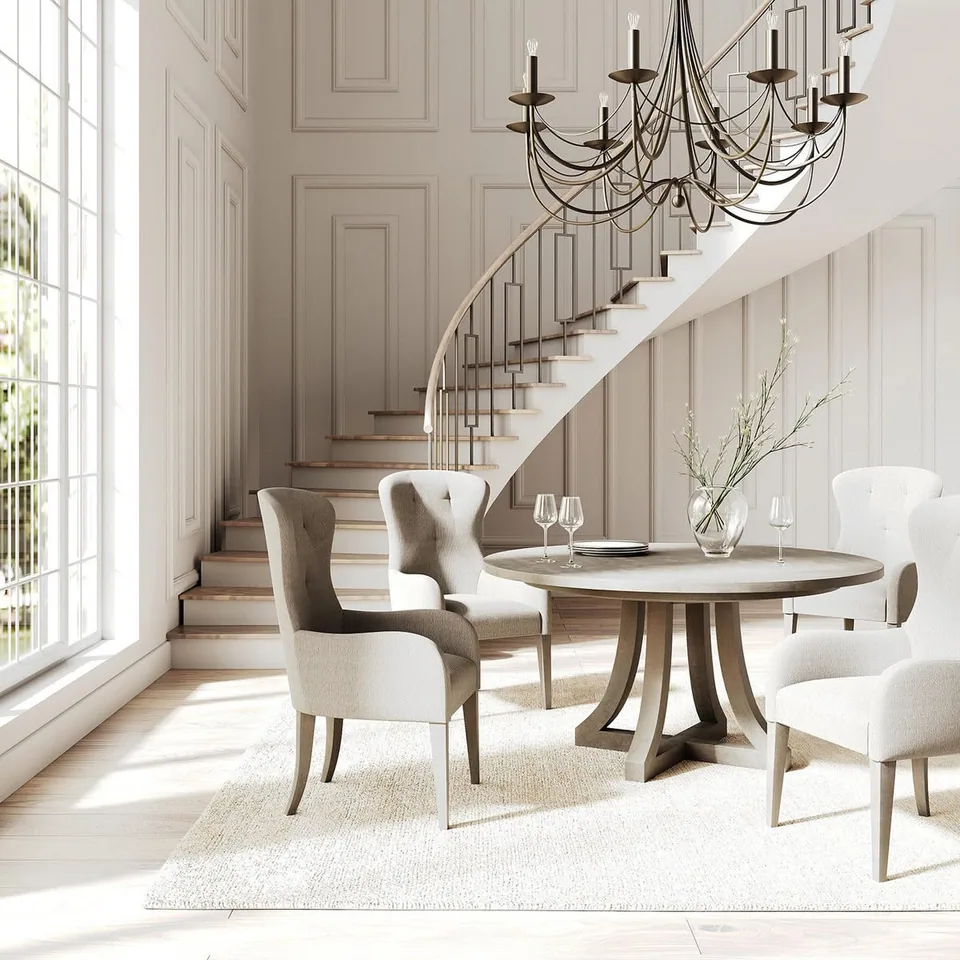
The opening visual study presents a bright dining room with a round table, tall windows, a curved stair, paneled walls, and a branching chandelier. It is not identified as a B&Co. project, a specific property, or proof of any built condition. The image can establish appearance only. It cannot show what sits behind a finish, what was previously known, what was accessible on another day, or what a qualified inspection might find.
The site’s New Jersey seller disclosure reference explains that the State form records answers supplied by the seller to the best of the seller’s knowledge. It also states that the seller is the source of that information and that the form is not a substitute for qualified inspection. That makes the disclosure a record of provided knowledge, not an independent examination of the property.
The separate home inspection reference describes a standard New Jersey home inspection as visual, functional, and non-invasive, limited to readily accessible elements within its defined scope. The written report identifies what was inspected, what was not inspected and why, and any material defects observed. That makes the report a record of scoped observation, not a promise that every condition was visible or tested.
Compare statements, observations, and blanks
Read the two records item by item rather than asking which one is more authoritative in the abstract. A simple working sheet can use three headings: stated by the seller, observed during inspection, and unresolved. Preserve the exact words and the date of each record. The third heading matters because not every difference is a conflict, and not every silence is reassurance.
When both records address the same component, place the entries together. One may describe history or prior knowledge while the other describes an accessible condition on the inspection date. Agreement can narrow the question. Different wording can sharpen it. Neither result should be expanded beyond what the record actually says.
When an item appears in only one record, first ask whether the other record was designed to answer it. The disclosure depends on the seller’s knowledge and the questions asked. The inspection depends on scope, access, visible conditions, and the services retained. An empty space may reflect those boundaries. It does not, by itself, establish absence, concealment, or clearance.
The useful comparison begins where one record stops and the next question remains.
Let the blank become a question
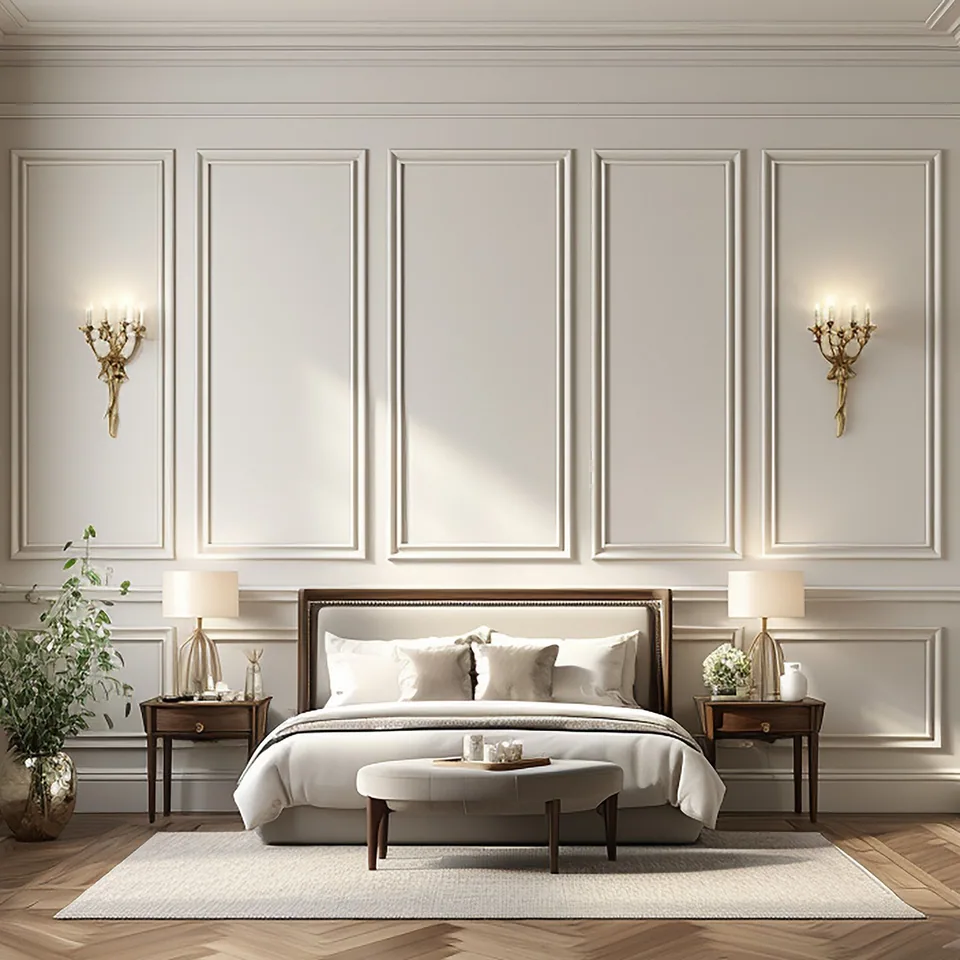
The bedroom image is a second, separate visual study. Its centered bed, matching tables and lamps, tall wall mouldings, sconces, bench, pale rug, and patterned floor create an orderly composition. That order should not be mistaken for condition evidence. A photograph may direct attention to a wall, opening, floor, or fixture, but it cannot supply the inspection scope, seller knowledge, or concealed information that the two records are meant to capture.